
Then Jesus told his disciples a parable to show them that they should always pray and not give up. He said: “In a certain town there was a judge who neither feared God nor cared what people thought. And there was a widow in that town who kept coming to him with the plea, ‘Grant me justice against my adversary.’
“For some time he refused. But finally he said to himself, ‘Even though I don’t fear God or care what people think, yet because this widow keeps bothering me, I will see that she gets justice, so that she won’t eventually come and attack me!’”
And the Lord said, “Listen to what the unjust judge says. And will not God bring about justice for his chosen ones, who cry out to him day and night? Will he keep putting them off? I tell you, he will see that they get justice, and quickly. However, when the Son of Man comes, will he find faith on the earth?”
Luke 18:1–8
Jesus is urging us to pray. He wants us to take advantage of this amazing opportunity. Often when we pray, it seems like nothing happens. And then we give up. He knows that is our natural tendency. He knows prayer takes faith. If people were faithful at praying naturally, he wouldn't need to tell this story and exhort us to pray in the first place. You don't tell people to do things that they're already doing.
So we know that God is more righteous than this human judge. Keep calling out to him. Jesus is inviting you to do so. But he also is asking something at the very end - when he comes back, will people have faith? His point is, one doesn't pray if they don't think it will do any good. You have to be intentional in your prayers and keep praying.
It is true he might not answer it the way you hope. But we don't know that and we do want to be found with faith, so keep on praying.
Learning to pray
I need to give a shout out to Donald Whitney. He has a great book entitled Spiritual Disciplines for the Christian Life. While I am not plagiarizing and some of his arguments aren’t unique, he does a great job of laying out the arguments in a coherent way. I would strongly recommend, if anyone likes this and wants to go further, getting that book. These essays are intended to help someone understand why these things matter without becoming a scholar on the topic.
With that said, prayer is critical to the Christian life. You can tell a lot about a person’s faith by how much they actually pray. Prayer is quite difficult work. Try it. If you put just 30 minutes aside each day for prayer, you will be amazed at how you will be tempted to chip away at that time for other things that aren’t nearly as important. You might be tempted to skip it or shorten it.
It is a little bit like giving: the more you give, the more intentional you will be about where you give. You don’t want to sacrifice your hard-earned money to the first pastor who says, “God is telling you to give it all to me.” You will observe and be intentional about where you give. You will start asking things like, “Does what they say match what I observe them doing?” Or perhaps, “Do they really seem in line with the priorities of Jesus, or are they simply praising him publicly with great music and then going on to do their own thing?” If giving is going to cost you dearly, you will naturally begin to think carefully about where to give in order to have the greatest impact on God’s priorities.
Praying is a lot like that. Once you start setting time aside specifically for prayer, you will naturally find yourself thinking about how you can improve your prayers. How can they be more tactical? How could they be more specific? You’ll be investing this time and asking how you can make it more effective, because praying is actually exhausting work. You want it to count for something!
Why pray?
First and foremost, Jesus exhorts us to pray, and it’s clear that he expects us to pray. If you claim to follow him and he is your Lord, then you need to do what he says, right? Matthew 6:5–9, Luke 11:9, and Luke 18:1 come to mind. He also asks whether he will find faith on the earth when he returns (Luke 18:8). He is linking faith and prayer together with this question. And it’s not just Jesus. Paul makes his feelings clear to the fledgling churches as well in Colossians 4:2 and 1 Thessalonians 5:17, for example.
How should we pray?
This is a great question. One of the clearest answers comes when the disciples ask Jesus to teach them to pray (Luke 11:1–4). Matthew also records a fuller form of the prayer Jesus taught. One wonders what the disciples had heard him say or observed him doing that led them to ask.
Jesus teaches his followers to pray
5 And when you pray, do not be like the hypocrites. For they love to pray standing in the synagogues and on the street corners to be seen by men. Truly I tell you, they already have their full reward. 6 But when you pray, go into your inner room, shut your door, and pray to your Father, who is unseen. And your Father, who sees what is done in secret, will reward you. 7 And when you pray, do not babble on like pagans, for they think that by their many words they will be heard. 8 Do not be like them, for your Father knows what you need before you ask Him.
9 So then, this is how you should pray: ‘Our Father in heaven, hallowed be Your name. 10 Your kingdom come, Your will be done, on earth as it is in heaven. 11 Give us this day our daily bread. 12 And forgive us our debts, as we also have forgiven our debtors. 13 And lead us not into temptation, but deliver us from the evil one.’
14 For if you forgive men their trespasses, your heavenly Father will also forgive you. 15 But if you do not forgive men their trespasses, neither will your Father forgive yours.
Here are seven parts of that prayer to think through:
- Our Father in heaven. Jesus intends for us to remind ourselves that this God is more than just our God. He is our Father.
- Hallowed be Your name. He also wants to remind us that while he is our heavenly Father, we don’t want to be too casual with him either. He is still the same God who caused Mount Sinai to smoke (Exodus 19). We need to honor his name. I cannot believe how much his name is taken in vain in my own culture. It is horrible, and most of these people don’t even know what they are saying. It is just the culture they grew up in. They aren’t intentionally out to besmirch his name (though a few are). Here, we intentionally want to honor and praise his name and acknowledge who he is and the value he has, to the degree our human minds can comprehend.
- Your kingdom come, Your will be done, on earth as it is in heaven. I admit that I don’t know 100 percent what this means. I know his kingdom won’t fully come until he declares it to be so. But to the degree that humans are responsible, we want to pray that people will make choices in line with God’s desires and holiness. Oh, if that were so, what a wonderful place this would be.
- Give us this day our daily bread. We are asking for our needs. This could be basic financial resources for daily living, a job, or something derived from this. It could be our health needs.
- Forgive us our debts, as we also have forgiven our debtors. This is acknowledging our sin and asking to be forgiven. But it is critical that we also acknowledge those who have done us wrong and let go of our anger or resentment toward them. This is easier for some than others. If you are in Nigeria and a group of extremists just came in and murdered your husband and youngest child, how hard would that be to forgive? Much more difficult than if you live in the West and someone fired you because they disliked Christians. But God tells us to forgive. As hard as that is, we can trust him, and that is part of the bargain when we ask him to forgive us. Jesus makes it clear in verses 14–15 that we must forgive others who have wronged us.
- Lead us not into temptation. Here we acknowledge how prone we are to stumble over temptation. Notice Jesus is not strategically thinking about how to stand up to temptation. His preference with this is that God will allow us to bypass the temptation altogether in the first place. We’re praying that it won’t even come up.
- Deliver us from the evil one. The prayer speaks of “the evil one,” pointing to a personal adversary. This is a part of the prayer that persecuted Christians around the world may seize on.
Usually, I pray through these seven themes. Each one can lead to other prayers on your mind. After this, I often have a list of specific concerns that these themes have not covered. It could include:
- The safety of other Christians.
- Leadership in the church.
- Humility for our political leaders, that they would fall on their knees and humble themselves before the living God, not just for show.
- Orphaned children and vulnerable people in difficult circumstances who need help.
- Faithfulness to God’s word in the church, not just lip service to “God is love.”
- The spiritual welfare of your children, nephews, nieces, siblings, parents, coworkers, and others.
These are just a few examples. As you start to spend serious time praying, you will come up with needs that you know will not be met without a miracle. And you know God is the only one who can provide these miracles. So given how much Jesus spent in prayer, his mind must have been thinking of prayer requests and how to meditate on things at other points in the day to serve as fuel for a lot of the requests when he was actually praying.
Does posture matter?
We obviously need to have a humble heart. The Bible shows people praying in several physical positions:
- Kneeling: Solomon (1 Kings 8:54), Daniel (Daniel 6:10), Stephen (Acts 7:60), Peter (Acts 9:40), Paul (Acts 20:36), and Jesus (Luke 22:41).
- Standing: Hannah (1 Samuel 1:9–10) and Jehoshaphat (2 Chronicles 20:5).
- Sitting: David (2 Samuel 7:18).
- Face down: Jesus (Matthew 26:39) and Moses and Aaron (Numbers 20:6).
- Lifting hands: encouraged in 1 Timothy 2:8.
I would highly encourage you to spend time in prayer on your knees if you are physically able to do so. It is a sign of humility and an embodied acknowledgment of who God is and who we are in relation to him. This doesn’t mean you shouldn’t pray in other positions. If Jesus himself knelt in prayer, we are certainly not above doing so.
This also assumes that you can get to a private place to do this. Matthew 6:6 teaches this. So this verse doesn’t specifically say to pray kneeling but it is almost implied. If I am praying in my mind sitting down, who is going to know? But to pray kneeling down, you need to go somewhere private and get away from it. I want to tread lightly here. My intention is not to say, “You’re doing it wrong,” if you aren’t kneeling. This is simply my opinion from observing what happens in the Bible. There are subtle signals we give off, and humility is something God enjoys. Praising him is such a privilege; why wouldn’t we want to enjoy our prayers like this?
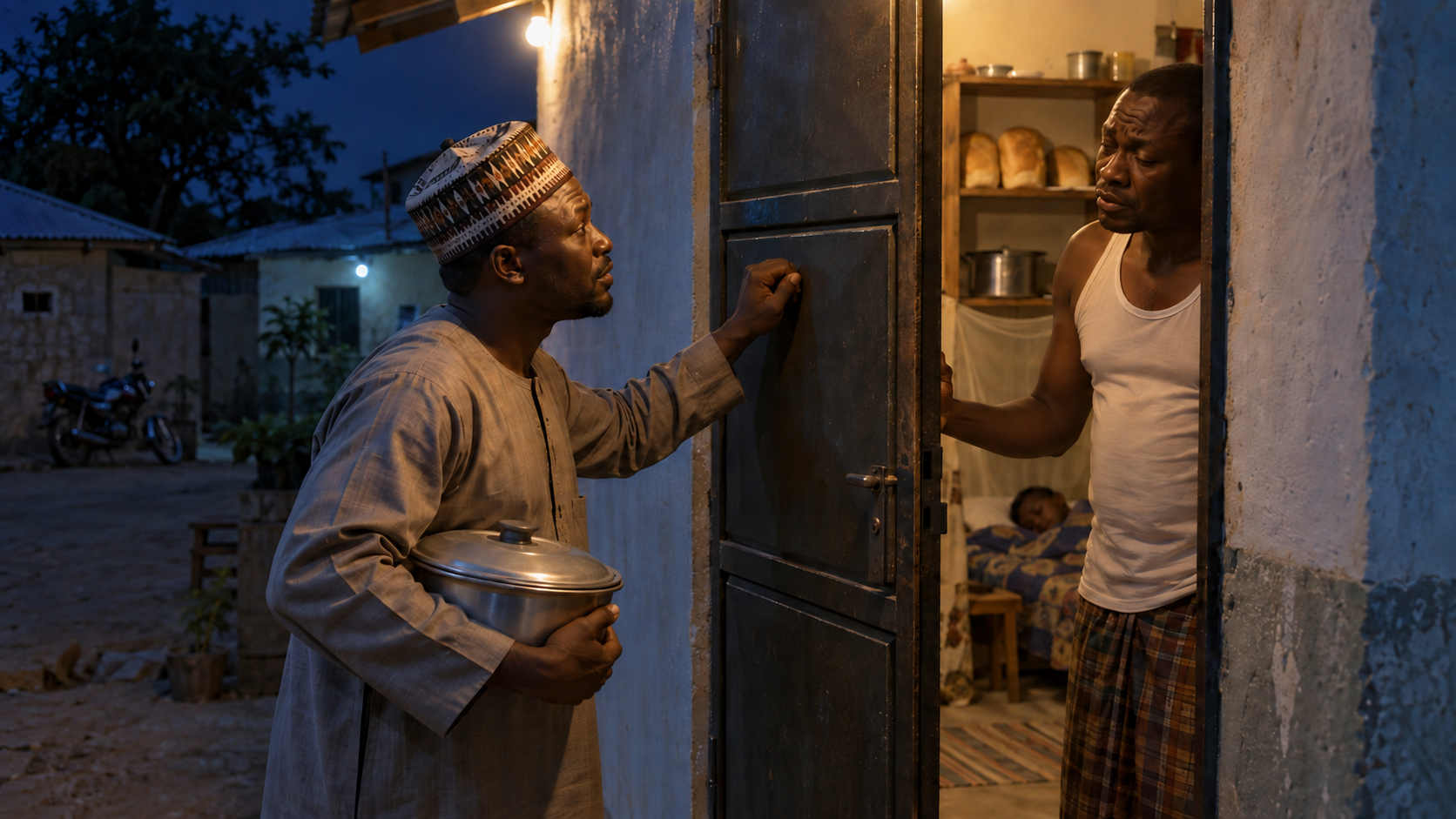
5 Then Jesus said to them, “Suppose you have a friend, and you go to him at midnight and say, ‘Friend, lend me three loaves of bread; 6 a friend of mine on a journey has come to me, and I have no food to offer him.’ 7 And suppose the one inside answers, ‘Don’t bother me. The door is already locked, and my children and I are in bed. I can’t get up and give you anything.’ 8 I tell you, even though he will not get up and give you the bread because of friendship, yet because of your shameless audacity he will surely get up and give you as much as you need.
9 “So I say to you: Ask and it will be given to you; seek and you will find; knock and the door will be opened to you. 10 For everyone who asks receives; the one who seeks finds; and to the one who knocks, the door will be opened.
11 “Which of you fathers, if your son asks for a fish, will give him a snake instead? 12 Or if he asks for an egg, will give him a scorpion? 13 If you then, though you are evil, know how to give good gifts to your children, how much more will your Father in heaven give the Holy Spirit to those who ask him!”
Luke 11:5–13
In all three of these analogies for prayer (widow and judge, bold neighbor, father and son), God is being compared to a human who is so much less and the human will eventually do the right thing even if it's not in their nature due to persistence. If this is God's own son giving us the inside track on how to persistently pray because it does make a difference, we would be wise to listen and apply this to our lives.
There is no formula that guarantees a particular outcome. You can ask God plainly for safety and help, even when you do not know what will happen next. Be assured if you are honoring him and Jesus is your Lord and Savior that he does hear your prayers. He is watching and he knows.
A short prayer
For someone who has been kidnapped
Lord, you see the person who has been taken, and you see everyone waiting for news. Protect their life. Restrain those who would hurt them, give wisdom and courage to those seeking them, and open a way for them to come home safely. Be near to them and to their family in this fear and uncertainty. Help us act wisely, seek help, and hold on to hope without pretending we know the outcome. In Jesus’ name, amen.
More prayers to come
This guide is still being developed. We plan to add biblical patterns of lament, asking for help, thanksgiving, confession, and trust, alongside other short prayers for difficult situations.
This is a draft for review. Prayer is not a substitute for seeking immediate, trustworthy help when someone is in danger.